Why Most Business Class Fares Are Overpriced and How Smart Travelers Avoid It
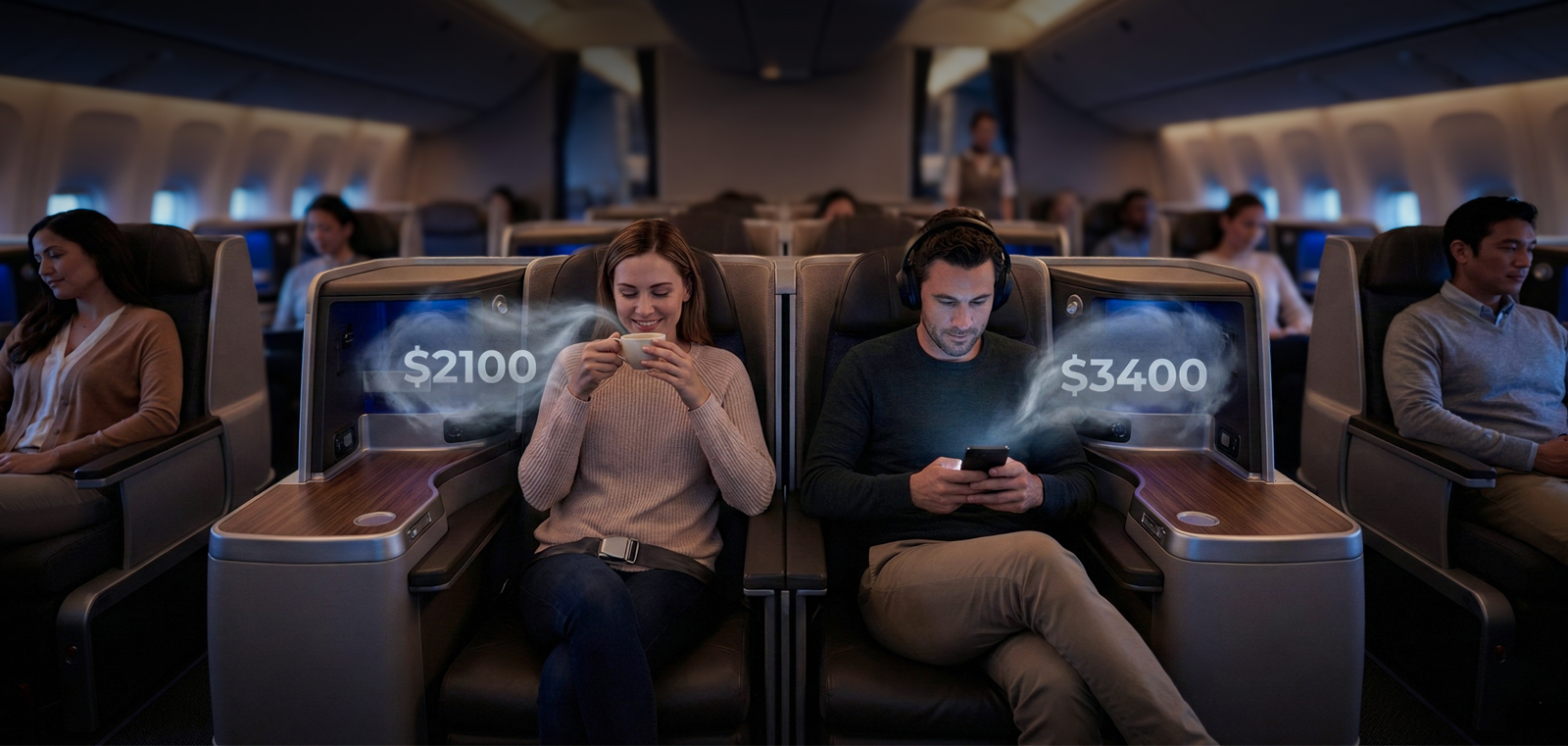
Business class is often perceived as a fixed commodity. A seat, a bed, a cabin, a price. Yet in reality, premium airfare operates more like a financial market than a retail product. Two travelers can purchase the same experience under the same conditions and still pay dramatically different amounts, not because of luck, but because of positioning.
Most published business class fares are not designed to represent value. They are designed to capture urgency, predictability, and habit. Airlines do not price premium cabins around comfort or distance. They price them around behavior. For travelers who understand this distinction, business class stops feeling expensive and starts feeling intentional.
How Airlines Actually Price Business Class Seats
Airlines segment premium travelers long before a ticket is issued. Every search, routing preference, and booking window feeds predictive models built to estimate willingness rather than preference.
Pricing is shaped by advance purchase behavior, route density, historical load factors, competitive positioning, and most importantly, perceived flexibility. A traveler searching ten days before departure on a popular weekday route is categorized differently from one evaluating options three months out across multiple gateways.
The cabin does not change. The service does not change. The cost basis of operating the seat does not materially change. Only the probability of payment does.This is why business class pricing often appears inconsistent. It is not inconsistent. It is adaptive. The fare reflects what the system believes you will accept.
On heavily trafficked routes such as New York to London or Singapore to Sydney, it is not uncommon to see business class fares fluctuate between 3,000 and 7,000 USD within the same quarter, despite no meaningful change in aircraft type or onboard service. The variance reflects demand segmentation rather than product differentiation.
On major long haul routes, it is not unusual to see fare spreads of several thousand dollars within the same cabin over a matter of weeks, sometimes even days, without any meaningful change in product. What moves is not the seat. What moves is demand sensitivity.
Why Urgency Is the Most Expensive Signal a Traveler Can Send
Urgency compresses optionality, and compressed optionality increases price.
Searches conducted close to departure, clustered around high demand corporate travel days, or restricted to nonstop itineraries immediately signal constraint. Pricing engines interpret constraint as reduced elasticity. When elasticity declines, yield increases.
Corporate booking environments intensify this dynamic. Internal approval cycles, preferred carrier agreements, and policy restrictions reinforce predictability. Airlines do not punish this behavior. They monetize it. Availability is maintained. Pricing remains firm.
For individual premium travelers, the mechanism is identical. The moment travel becomes fixed rather than flexible, negotiation disappears. The system no longer needs to compete for the booking. It simply needs to process it.
Urgency is not inherently wrong. It is simply expensive when unmanaged.
Why Published Business Class Fares Are Benchmarks, Not Opportunities
The first fare displayed is rarely the market floor. It is the anchor.
Published business class fares serve three strategic purposes. They establish perceived value. They capture necessity driven demand. They create contrast for selectively released alternatives.
Beneath this visible layer exists a parallel pricing architecture built around fare construction, alternative points of origin, combinable segments, advance purchase thresholds, and distribution channels not always surfaced in standard searches.
For example, adjusting departure city within the same region, restructuring a return point, or altering ticket construction can unlock materially different fare classes while preserving the identical onboard experience. The aircraft remains the same. The cabin remains the same. Only the structure changes.
Travelers who accept the anchor rarely see this layer. Travelers who interrogate it consistently do.
The objective is not to decide whether a fare feels reasonable. It is to determine whether it represents the full spectrum of available construction.
Booking Behaviors That Quietly Inflate Business Class Costs
Several common habits increase premium airfare without increasing value.
A fixation on nonstop flights concentrates demand and eliminates competitive routing logic. While convenience has merit, the pricing premium attached to it is often disproportionate to the time saved.
Rigid date selection communicates inelastic demand. Even minor shifts of one or two days can reposition a fare into a different pricing tier, particularly on long haul international routes.
Exclusive loyalty to a single carrier narrows exposure to alternative alliances, joint ventures, and fare bases that may offer comparable service with materially different economics.
Late booking compounds all of the above. As departure approaches, remaining inventory is increasingly allocated to high yield segments. At that stage, pricing reflects urgency rather than opportunity.
None of these behaviors are mistakes. They are simply unexamined defaults.
How Experienced Travelers Secure Better Value Without Compromising Standards
Seasoned premium travelers do not pursue discounts. They manage structure.
They begin with exploratory searches designed to map pricing contours rather than finalize purchase. This preserves flexibility and reveals where volatility exists.
They treat routing as a lever. A single connection through a strategic hub can preserve comfort while repositioning the fare entirely. They evaluate ticket construction rather than relying solely on surface pricing.
They monitor fare cycles. Business class inventory is not static. Release patterns follow competitive pressures, load factor adjustments, and seasonal transitions. Those who observe rather than react consistently encounter better alignment.
Most importantly, experienced travelers assess conditions alongside cost. Change flexibility, refundability, combinability, and fare basis matter as much as the headline number. The objective is not to pay less. It is to pay proportionately.
The distinction is subtle, but decisive.
Rethinking What Paying Full Price Really Means
Paying the highest published fare is often framed as efficiency. In reality, it frequently reflects disengagement from how the system functions.
True efficiency in premium travel is measured by alignment. When urgency is unavoidable and convenience is paramount, paying a premium may be entirely rational. When flexibility exists, however, ignoring structural alternatives becomes a choice rather than a necessity.
Once this perspective shifts, business class stops resembling a luxury surcharge and begins functioning as a strategic allocation. The experience does not change. The approach does.
For frequent premium travelers, consistent value rarely emerges from public search alone. It emerges from understanding inventory release patterns, fare construction logic, and distribution pathways that are not always visible at first glance.
Advisory led planning operates within this structural layer. Not to reduce standards, but to remove opacity. Not to chase lower prices, but to engineer better positioning.
At Above9, premium travel is treated as a discipline rather than a transaction. The objective is not to find cheaper seats. It is to secure superior outcomes repeatedly, with clarity, discretion, and intent.
For travelers who understand that time, comfort, and capital are interconnected, that distinction is not subtle. It is fundamental.