
Japan in Autumn 2026: A Real Guide to Koyo Season for Experienced Travellers
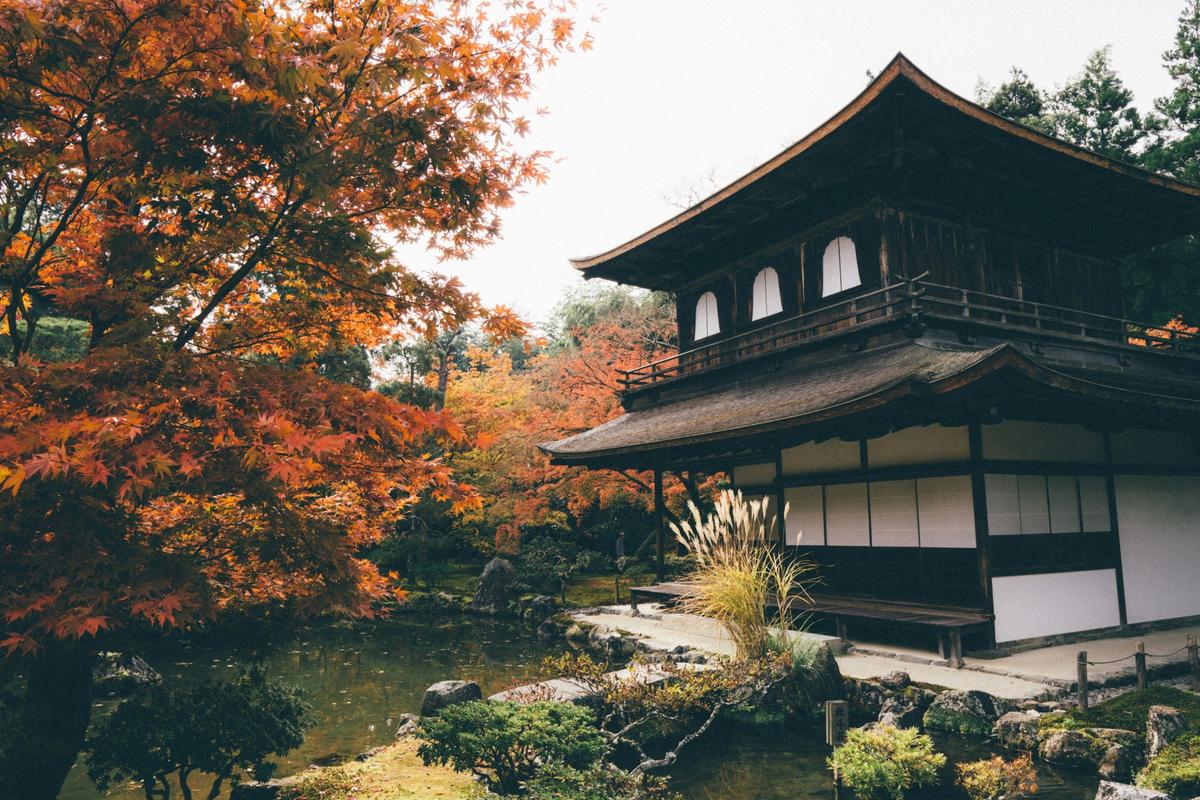
You can fly all the way to Japan for the autumn leaves and end up looking at green ones. Or brown ones. Not the red maples you came for.
The reason is simple. They arrived two weeks early. Or ten days late. Or they picked the one city where the peak already came and went. Koyo, the autumn leaf season, is not one event. It is a slow front that moves down the country from mid-September through early December, reaching northern and higher places first. Your week matters. So does your destination.
Book Kyoto for November 8th because someone said “November is when the leaves peak” and you could spend a week looking at trees that are still mostly green. The month alone is not enough information to build a trip around.
So. Here’s how to plan Japan in autumn 2026 without asking one fortnight to deliver every photograph you’ve saved.
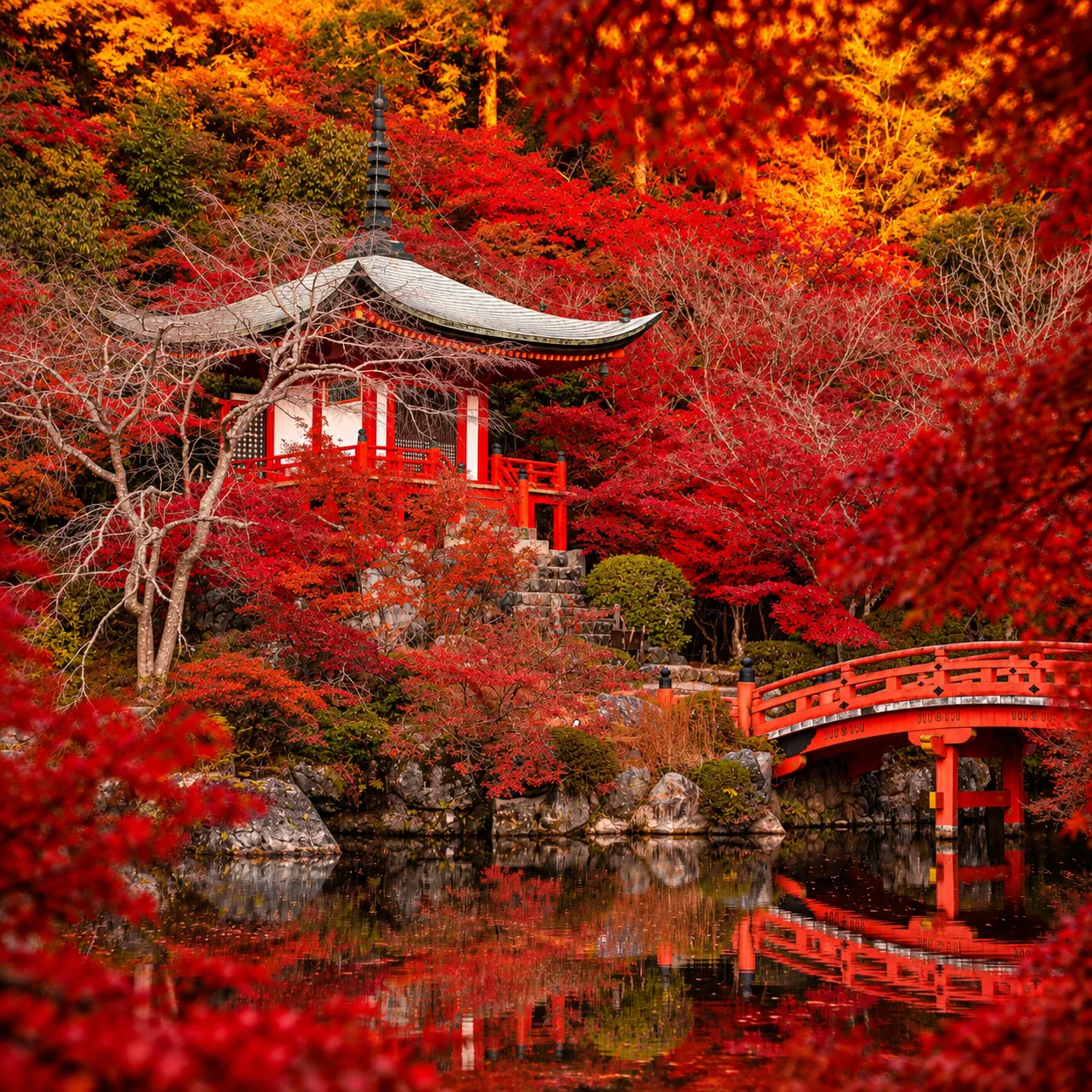
A red bridge over a body of water surrounded by trees - Photo by - Alan Jiang / Unsplash
Why autumn is the smart season
Cherry blossom season is beautiful. Everyone knows this. Everyone also wants to book it. The hotels you want can fill quickly, and Kyoto in early April can feel closer to a queue than a city.
Autumn is different. Or rather, it can be. Japan’s autumn leaves give you a longer nationwide travel season to work with, even though any individual garden has a much shorter window. You can choose October in the mountains or a later trip through Tokyo and Kyoto. That flexibility is the opportunity.
Do not confuse it with an empty Kyoto. The famous temples are busy during koyo too. But choose your dates and daily route carefully, and November can give you the Japan that made you want to go in the first place.
Japan in November weather and what to pack
For city sightseeing, November often means comfortable walking weather and cooler mornings and evenings. Mountain stays are another matter. Pack layers, comfortable shoes and rain protection, then add proper warmth for Hakone, Koyasan or an evening spent standing outside a temple. The JNTO November guide is a useful starting point. Check the local forecast before packing.
There’s a second thing that matters. The actual price of the trip. A favourable exchange rate can help, but it does not tell you what Aman Kyoto or your chosen ryokan will cost for your dates. Compare current quotes. A currency headline is not a hotel rate.
When does koyo actually peak in 2026
This is the section that matters most. Choose the wrong week for the place you care about and a beautiful hotel will not turn the leaves red.
Koyo generally moves north to south and downhill as the season advances. But Sapporo is not Daisetsuzan, and Kanazawa is not Kamikochi. Altitude and tree species matter as much as the regional name on a map.
Use these usual windows to narrow the route. They are seasonal guidance, not a promise about Japan fall foliage on a particular day in 2026.
Seasonal planning guide. These are broad usual windows, not confirmed 2026 peak dates.
Area | Planning window | How to use it |
|---|---|---|
Hokkaido’s highlands | September–October | Plan by mountain and elevation. Do not apply Daisetsuzan’s timing to Sapporo. Seasonal background. |
Tohoku | October into November, depending on place | Choose the specific gorge, lake or city before fixing a date. JNTO’s October guide. |
Nikko | October for many higher areas; later around the town | Separate Okunikko from the shrine and temple area. Local foliage guide. |
Kamikochi | Mid- to late October in the main valley | Maples and larches have different sequences. Check access as well as colour. Official seasonal update. |
Hakone | Late October–November, varying by elevation | Match the lake, hills and lower valleys to conditions on the day. Hakone autumn guide. |
Koyasan | Late October–early November | This is usually an earlier option than central Kyoto. Official season guidance. |
Tokyo, Kyoto and other later-season cities | November into December, depending on location and tree | Check the named park or garden; a city forecast is only a reference point. JNTO seasonal guide. |
One thing plainly. “Kyoto in November” is too vague. For central Kyoto’s maples, late November into early December is a more useful starting point than assuming the first week will deliver the same colours. Then check the specific gardens. A city forecast cannot tell you what every temple will look like.
If early November is the only week you can travel, change the route before you give up on the trip. The right destination matters more than insisting on the famous one.
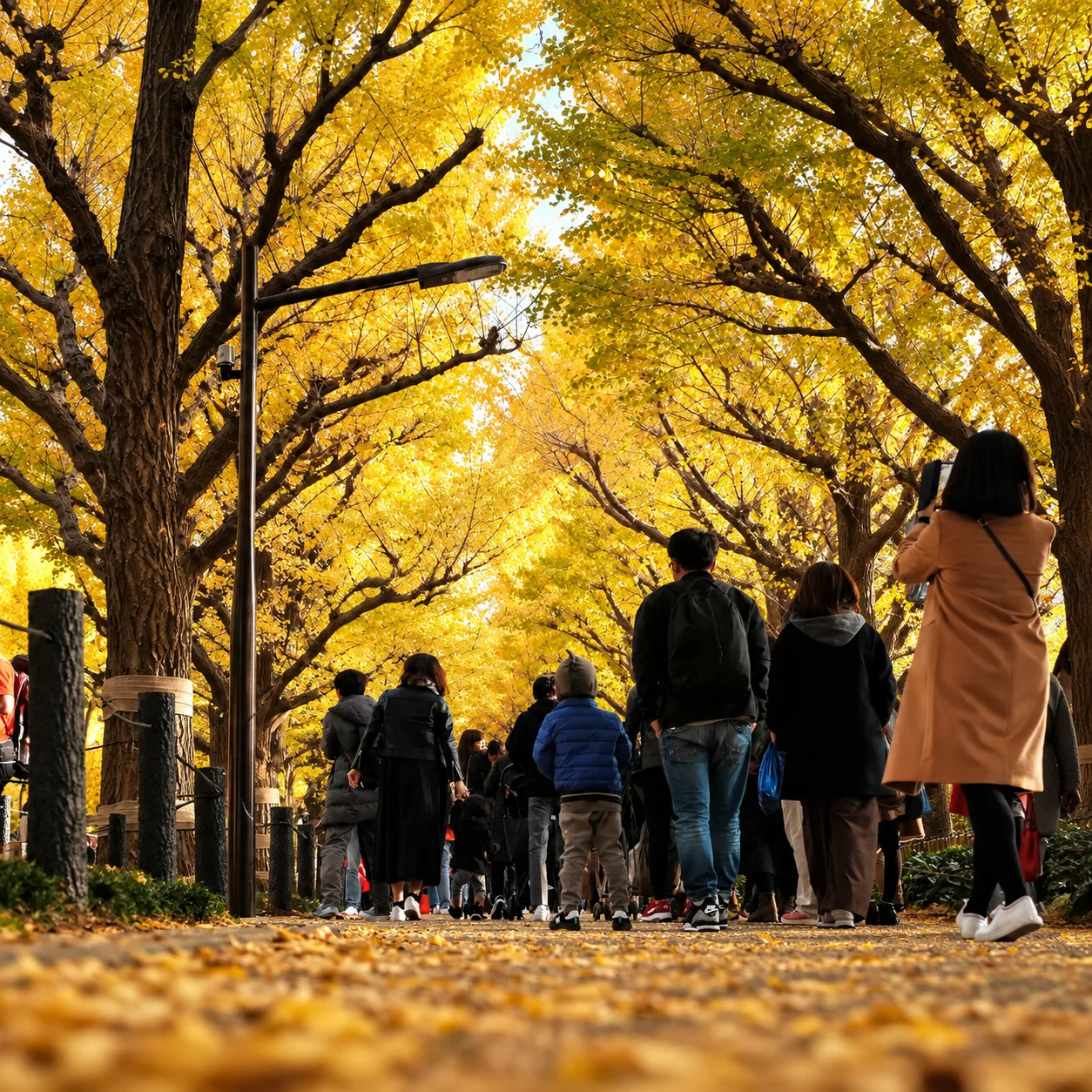
Golden ginkgo leaves in Tokyo. Popular autumn walks can be busy, so allow time to enjoy the surroundings without rushing.Photo by Hakan Nural / Unsplash.
Where To Go, Ranked Honestly
Not every part of Japan is worth flying for in autumn. Some places are better in other seasons. Some are just overrated. Here's the honest version.
Kyoto
Kyoto in the right week is one of the most beautiful cities on earth. Tofuku-ji’s maples. Eikan-do at dusk during a confirmed evening opening. The Philosopher’s Path with the leaves turning. Kifune and Kurama in the northern hills, if you want to get beyond the central circuit.
But Kyoto with no plan is a queue. A long, slow queue full of people taking the same photograph. Same temple, same angle, same disappointed selfie.
Two rules. Arrive around the published opening time of the temple you actually want to enter. And group your visits by neighbourhood. Tofuku-ji’s admission times are worth checking before setting an alarm. A blanket “go at 8am” does not work for every gate.
For Arashiyama, go early if the bamboo grove matters to you. For evening illuminations, check the named venue and its confirmed dates. Do not build the trip around an assumed annual event.
Hakone
Hakone deserves more than a rushed day trip. Lake Ashi. The mountain scenery. The ryokan culture. This is where you stop trying to collect places and give a good property time to do its job.
Gora Kadan belongs on the shortlist for a traditional luxury ryokan stay. Hakone Ginyu is another strong option if an open-air bath in your room is the priority. Confirm the room category, view and meal plan before booking.
Give it two nights. Onsen. Eat. Sleep. Leave a full day without checking in or out. Higher slopes and lower valleys turn at different times, so choose Hakone for the stay as well as the leaves.
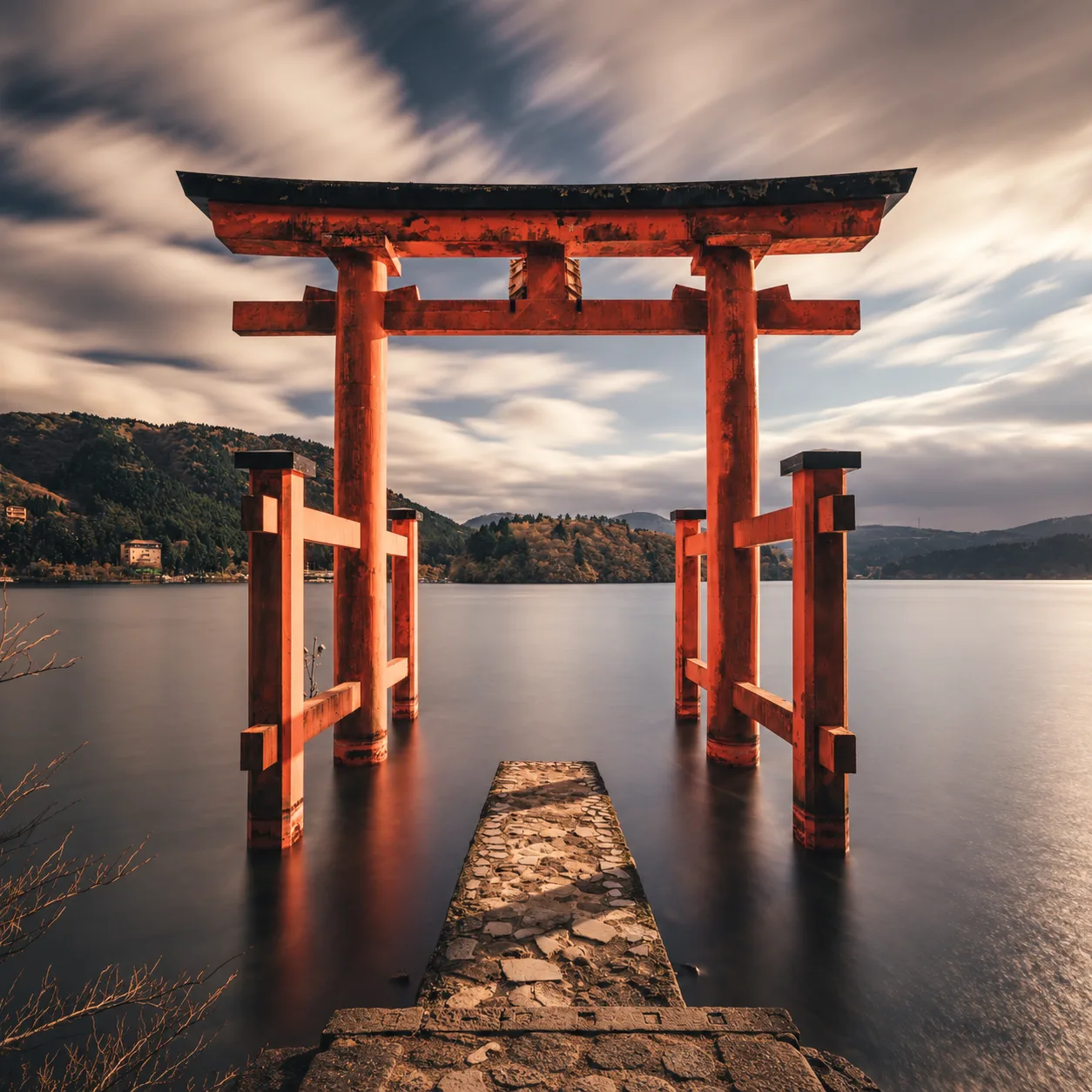
Hakone Shrine’s lakeside torii at Lake Ashi. Choose Hakone for its landscape and ryokan experience as well as the possibility of autumn colour.Photo by Tianshu Liu / Unsplash. Destination photograph; it does not establish seasonal conditions for your dates.
Takayama and the Japan Alps
Central Japan in October deserves a trip of its own. Takayama has historic streets and morning markets. Kamikochi gives you the river, wooded valley and mountain backdrop. Kanazawa adds gardens and cultural depth, but its lower elevation means a different foliage calendar.
Wanosato, in the countryside outside Takayama, is the ryokan to investigate if a rural stay is the point of the journey. Give dinner and the setting their own evening. Do not make it a late arrival between two long transfers.
Kamikochi is the date-sensitive part. Its regular buses and facilities operate through 15 November, closing from 16 November under the published schedule. Check official access information and your accommodation’s own dates. Open does not mean at peak colour. The valley’s autumn season belongs mainly to October.
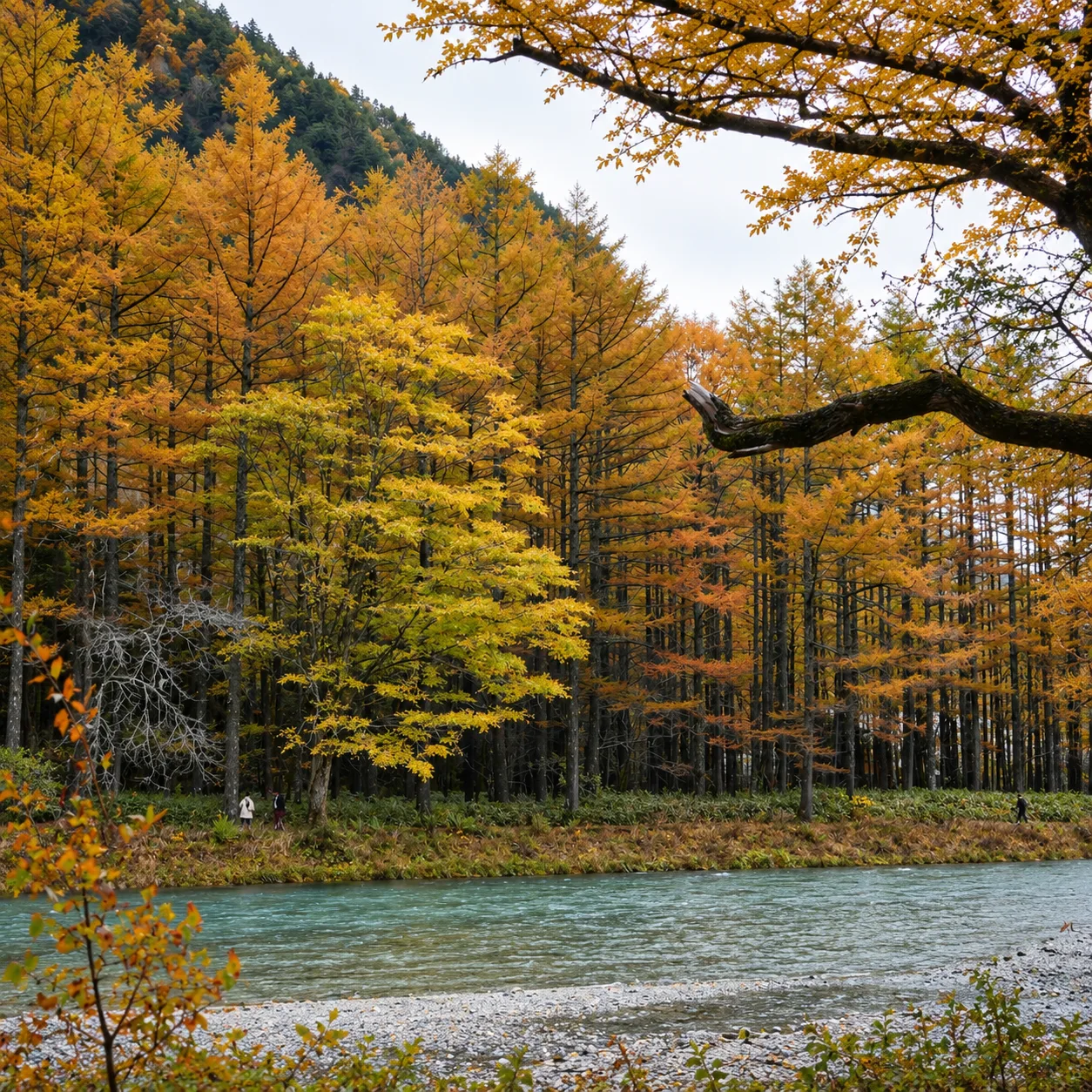
Autumn beside the river in Kamikochi. The valley’s earlier season makes it a different planning choice from a late-November Kyoto stay.Photo by Alexa Soh / Unsplash. Illustrative photograph, not a live 2026 foliage report.
Nikko
Let’s be direct. Nikko should not be an automatic addition just because it appears on every autumn list. The temples and mountain scenery may be exactly what you want. The extra journey may also be the wrong use of a short trip.
If your priority is a restorative ryokan stay between Tokyo and Kyoto, Hakone is the stronger fit for that route. If shrines, walking and mountain scenery are the point, give Nikko proper time. Its higher areas and lower temple district turn at different times, as the local autumn guide explains.
Koya-san
If you’ve done Japan before and want a different rhythm, consider a Koyasan temple stay. Sleep in a working Buddhist temple. Eat shojin ryori, Buddhist vegetarian cooking. Join morning services where the temple offers them. Walk towards Okunoin among the cedars.
But get the season right. Koyasan’s usual foliage window is late October to early November, earlier than central Kyoto. It is not a reliable red-leaf finale after a late-November Kyoto stay.
The rooms and bathing arrangements vary. Check the actual temple before booking. This is a different definition of luxury, and that is the reason to go. Choose it for the experience even if the leaves have already fallen.
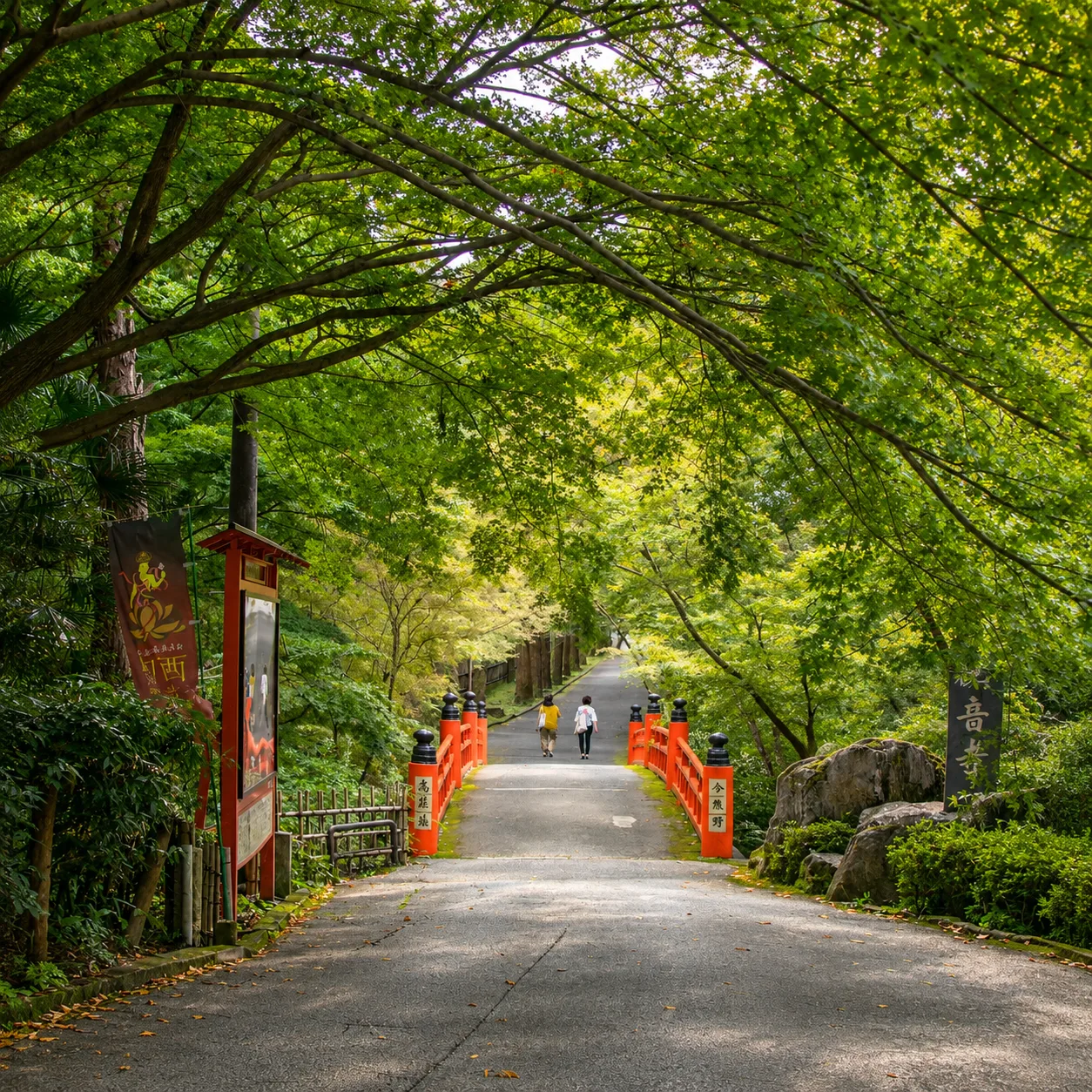
A vermilion bridge among autumn trees in Koyasan. Its mountain setting usually brings colour earlier than central Kyoto.Photo by Alexander Schimmeck / Unsplash. Illustrative photograph; exact capture date is not confirmed.
The ryokans worth the money
A high room rate does not automatically buy the experience you have in mind. Here’s the shortlist to investigate, with one distinction up front. A luxury hotel, an onsen ryokan and a glamping resort are different kinds of stay.
For Kyoto. Aman Kyoto for a luxury resort setting. HOSHINOYA Kyoto for an Arashiyama stay where the arrival is part of the experience. Boat transfers are the usual arrangement, with car transfers when boats cannot operate. The Ritz-Carlton if you want an international hotel brand. Tawaraya if a traditional Kyoto inn is what you came for.
For Hakone. Start with Gora Kadan and Hakone Ginyu. For a ryokan with a private onsen, check whether the bath is in your room or booked for exclusive use, whether it uses hot-spring water and what the rate includes. These details matter more than the word “luxury”.
For central Japan. Wanosato outside Takayama. That’s the rural stay to put on the shortlist if the route takes you through this part of Japan.
For the Fuji Five Lakes. HOSHINOYA Fuji is a glamping resort overlooking Lake Kawaguchi. It is not a Hakone ryokan. Treat it as a separate routing choice, with its own transfer time.
For the Nara countryside. Sasayuri-ann is an option to investigate for a thatched-house stay. Check the specific property, capacity and access before deciding it belongs in the route.
For Tokyo bookends. Aman Tokyo or The Tokyo EDITION, Toranomon. Start with the experience you want, then check how the location fits the neighbourhoods you plan to explore.
The meal is part of the decision too. Confirm dinner times and inclusions before booking a late transfer. Our guide to culinary travel explores that side of choosing a destination.
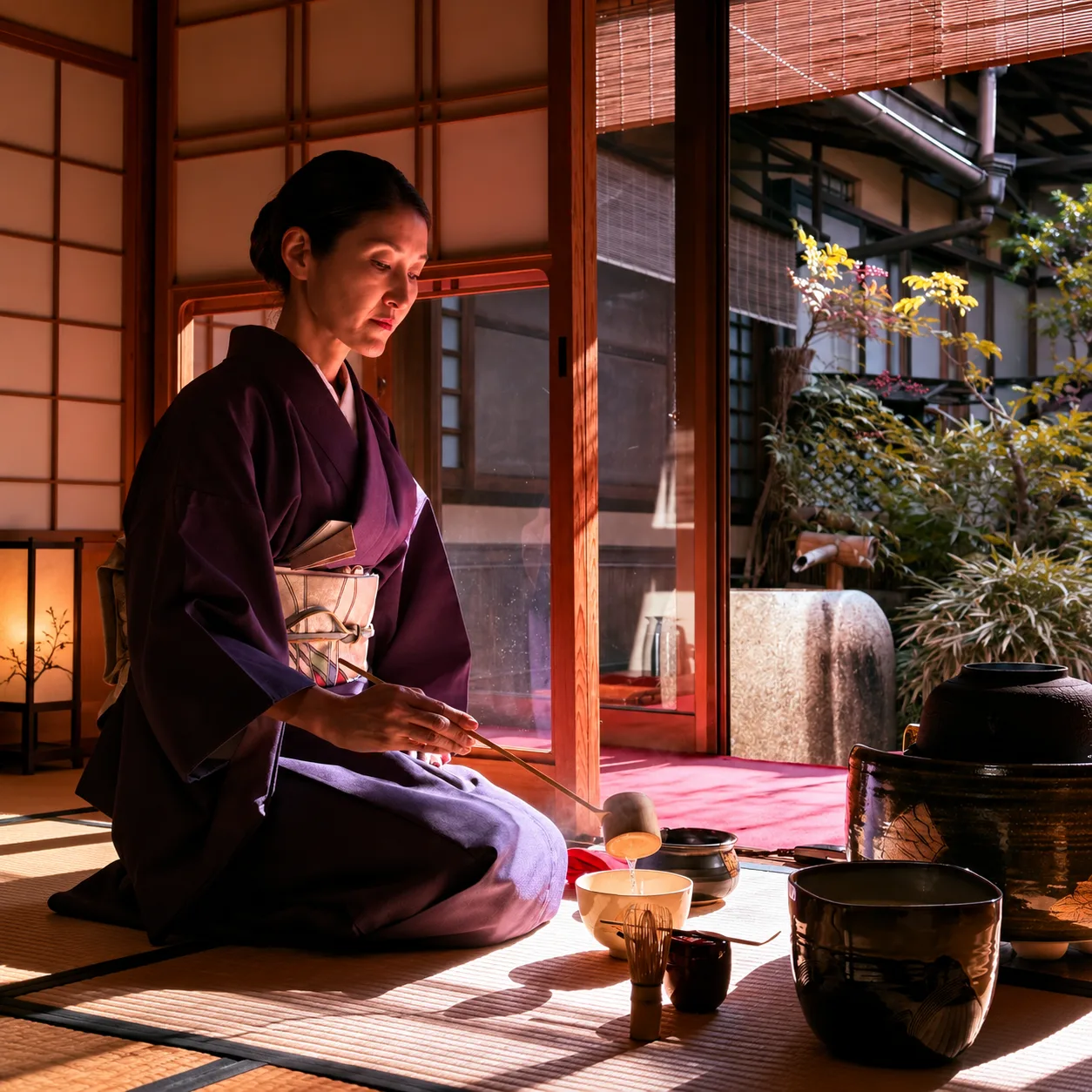
A tea ceremony in Kyoto. A hosted cultural experience can bring a different pace to a day of sightseeing.Photo by Tiago Ebisui / Unsplash.
Booking window. Start with the actual room and dates you want. Small properties have limited choice, but reservation-release schedules differ. Check availability and cancellation terms now rather than relying on a blanket claim that Japan is almost sold out.
What Most Travellers Get Wrong
A few planning mistakes are worth avoiding.
Trying to catch Hokkaido and Kyoto at peak colour in the same fortnight. Their best periods can be weeks apart. Pick one seasonal priority. You can visit both, but do not expect the same stage of autumn in each.
Booking Kyoto by month instead of by place and week. Early November and late November are different propositions. Use current reports for the gardens that matter to you.
Forgetting Kamikochi’s operating season. If it is on the itinerary, plan around the published closing schedule and check conditions. Do not add it to a late-November route.
Assuming the JR Pass covers everything. It doesn’t. Most private railways are separate. Nozomi requires an additional pass-holder ticket. HARUKA between Kansai Airport and Kyoto is covered by the nationwide pass’s JR validity. Check the official conditions, then do the maths for the journeys you will actually take.
Booking a ryokan and leaving no time to enjoy it. Arriving just before dinner and leaving straight after breakfast misses the point. Two nights give you a day that belongs to the stay.
Thinking every ryokan offers the same experience. A traditional Kyoto inn and a mountain onsen ryokan can both be excellent. Choose the setting, bathing arrangements and daily rhythm you want. Tatami alone does not answer that question.
How To Structure Two Weeks in Japan
There’s a version of this trip that works and a version that is mostly luggage. City time, a proper ryokan stay, central Japan and a generous Kyoto finish can fit. But the transfers have to earn their place.
For late November into early December, this gives you 14 days and 13 nights. The foliage priority is Kyoto. Hakone and Takayama earn their places for the stays and towns, even if the mountain leaves have already fallen. This is a varied autumn journey, not a route that catches every region at peak colour.
Days 1 to 3 in Tokyo. Three nights. Arrive and recover. Aman Tokyo or Edition Toranomon if they suit your budget and plans. Don’t try to see everything. Pick three neighbourhoods and go deep.
Days 4 to 5 in Hakone. Two nights. Travel from Tokyo, allowing for the transfer from the station to your ryokan. Onsen. Eat. Sleep. Don’t schedule every hour. This is the recovery block.
Day 6 in Kanazawa. One night. Allow for the journey from Hakone and keep the arrival afternoon simple. This is a short introduction to the city, not time to see everything.
Days 7 to 8 around Takayama. Two nights. Continue to Takayama and give the old town and a rural ryokan their own time. Wanosato is the stay to investigate. With a short visit, do not automatically add Shirakawa-go as well.
Days 9 to 13 in Kyoto. Five nights. Travel from Takayama and settle in. Give the gardens room to change with the weather. Take a day trip to Nara, add Osaka if it interests you, and leave some afternoons unclaimed. Split between a luxury property and a traditional inn only if the change itself adds something.
Day 14 home through Kansai. Allow time for the airport transfer. If flight times make a final night closer to the airport useful, move the thirteenth night rather than accidentally creating a fifteen-day trip.
Want fewer transfers? Drop Kanazawa and Takayama and give those three nights to Kyoto, making eight nights there with time for day trips. If Kamikochi matters most, build an October trip around it instead. It does not belong in this late-November route.
A Koyasan overnight also needs a night taken from somewhere else, or an extra day. The temptation is to keep adding. Resist it. Our guide to the art of slow travel explains why fewer moves can make a better trip.
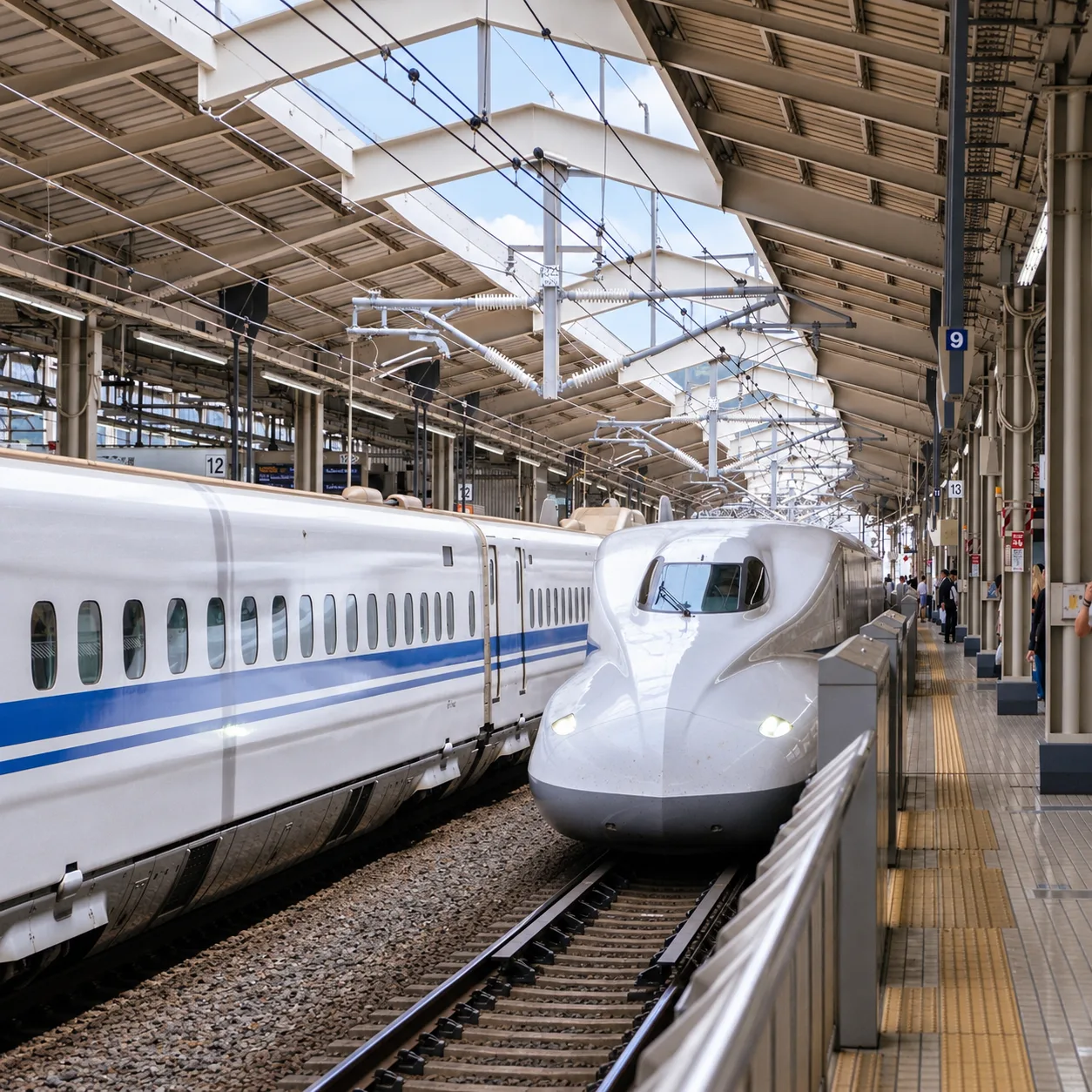
Shinkansen trains at Kyoto station. Allow time for station transfers and onward journeys when planning the move between bases.Photo by Johan Mouchet / Unsplash.
Getting There, And In What Cabin
From Europe or North America, Japan is a long flight. This is one of those trips where the cabin can make a real difference to how you feel on arrival. So can a sensible schedule.
Start by comparing ANA and Japan Airlines business class, then look at connecting options from your departure airport. Check the aircraft and seat on the actual flight. The airline name alone does not tell you what you are buying. Our guide to the differences between business class experiences covers what to compare.
On miles, Virgin Atlantic Flying Club remains an option to investigate for ANA. The chart checked on 1 October 2026 lists one-way business-class rewards at 52,500 Virgin Points between Japan and Western USA, and 60,000 for Central/Eastern USA. Taxes, fees and surcharges are extra. Availability is the hard part. Check the official ANA partner chart and seats before transferring points.
Haneda vs Narita
A small thing that matters more than it sounds. Look at the journey from the airport to your first hotel, not just the arrival time printed on the ticket. Haneda is often convenient for central Tokyo. Narita can still be the better choice if the fare, flight schedule or hotel connection works better.
If you finish in Kyoto, compare arriving in Tokyo and leaving from Kansai with a Tokyo return. Avoiding a journey back across the country may be worth more than a small saving on the fare.
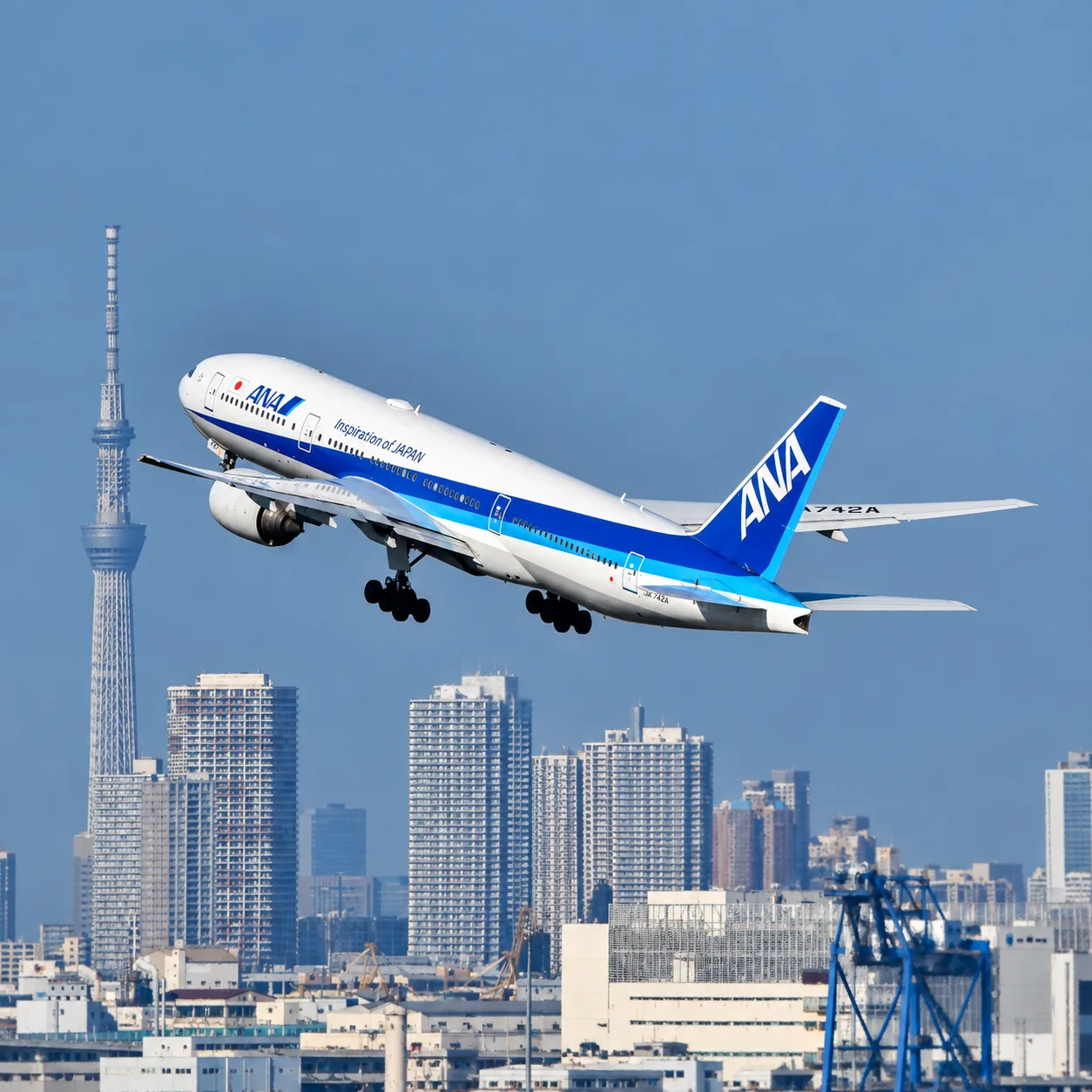
An ANA Boeing 777 departing Tokyo Haneda. Compare the airport, schedule and onward journey when choosing your flight.Photo by David Syphers / Unsplash.
For cash fares, explore business class flights to Japan with your departure airport, dates and preferred route in mind.
The Above9 Take
Japan in autumn isn’t one trip. It’s three or four, depending on which week you arrive, which region you target, and whether you understand that the mountains and the cities can be weeks apart in November.
The travellers who do this well approach it the way they’d approach a proper wine list. Not everything is equally good for the occasion. Some things are extraordinary. Some are the wrong choice for your dates. The skill is knowing which is which before you commit.
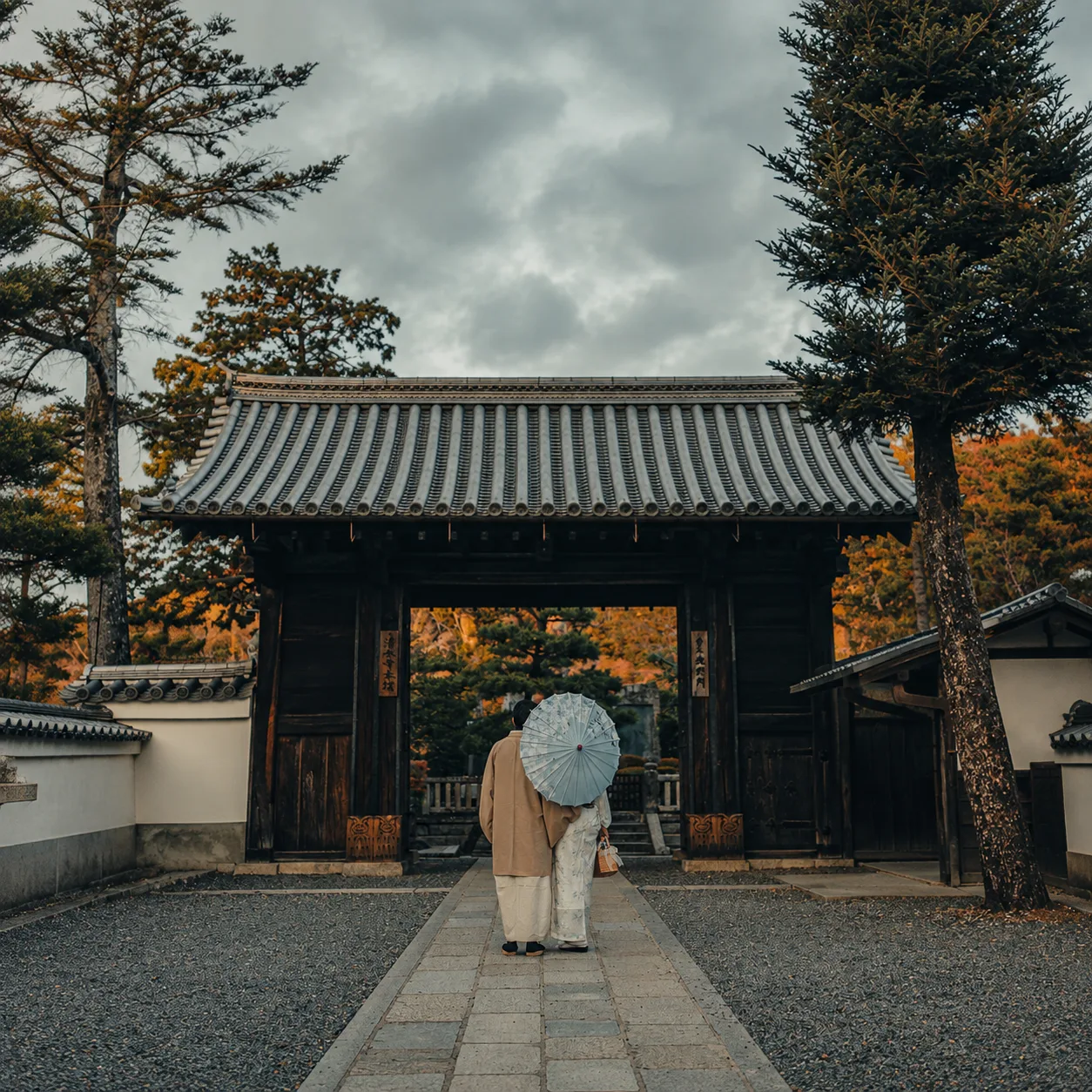
Visitors at a temple gate in Kyoto. Leave time for the walks between planned stops, as well as the places themselves.Photo by Sir. Simo / Unsplash.
At Above9, we treat premium travel as a discipline rather than a transaction. The goal isn’t to reach Japan. It’s to structure a trip where the season, the routing and the choices all serve each other. Koyo rewards the traveller who thinks about it carefully.
If Japan is on your list for autumn 2026, start with your dates and the places that matter most. Check the rooms. Compare the flights. Build a trip that still works if the leaves turn a week later than you hoped.
More from Above9
Plan your autumn flights with Above9
Share your departure airport, preferred dates and whether you want to arrive in Tokyo and leave from Kansai. We’ll help compare business class options that fit the trip.