How To Book Business Class With Miles In 2026: A Practical Global Guide

Above9 Travel is a premium travel advisory serving business class and first class clients across international markets. This is an editorial view.
The idea of "booking business class with miles" has been written about badly for over a decade. Most published guides are American, biased toward the credit card ecosystem that funds them, and quickly out of date. For an experienced international traveller flying between London and Singapore, Dubai and Sydney, or Spain and New York, the standard advice rarely matches the actual programs, routes, and redemption values that matter.
This is the Above9 view on how to book business class with miles in 2026, written for a global audience. It covers the mileage programs across the US, UK, EU, Middle East, Asia and Australia that experienced flyers actually use, the specific business class redemptions that remain genuinely valuable, and the workflow that separates a well-executed booking from one that costs three times what it should.
The short version: 2026 is a materially better year to book business class with miles than 2022 was. Several airline programs have devalued, but the ones that remain useful have quietly become excellent. The traveller who understands which programs still deliver, and how to route miles through them, can access the same seat their neighbour paid seven thousand dollars for.
Why Book Business Class With Miles At All In 2026?
The premise deserves a clear answer before the mechanics do.
For most short-haul flights and most economy travel, paying cash is the intelligent choice. The value of a mile against a discounted economy fare rarely exceeds one and a half cents, and the redemption effort is not worth the small saving. This is where most miles content gets the framing wrong.
Where miles genuinely deliver is long-haul business and first class. On a London to Tokyo return in business class, the cash fare typically sits between $5,500-$11,000 depending on the airline and the date. The same journey booked well with miles costs somewhere between 130,000 and 200,000 miles plus $500-$1,100 in taxes and surcharges. In cents-per-mile terms, that redemption delivers between four and eight cents of value against cash, a multiple that no economy redemption matches.
For the frequent international flyer, this changes the calculation. A traveller who earns 200,000 miles per year through a mix of paid flights and credit card spend can, in effect, subsidise a business class long-haul return every year without an additional cash outlay. The programs that make this possible are not the ones most bloggers write about.
There is also a second reason that matters for the HNI audience. Cash business class is often a business expense. Redemptions are not. Booking miles for personal travel while paying cash for corporate travel is one of the quietest and most rational asset-management moves in premium travel, and one that mileage program marketing rarely addresses.
How Does Redeeming Miles For Business Class Actually Work In 2026?
The mechanics are simple, but they are counterintuitive if you are approaching them for the first time.
Airlines belong to one of three global alliances: oneworld, Star Alliance, or SkyTeam. Within an alliance, members allow each other's frequent flyer members to redeem miles for seats. This means you do not need to hold British Airways miles to fly British Airways in business. You can hold Qatar Privilege Club Avios, Cathay Asia Miles, or Alaska Atmos Rewards, all of which redeem on British Airways seats through the oneworld agreement.
The workflow that follows from this is straightforward:
Identify the airline and specific business class product you want to fly
Identify which mileage programs can redeem on that airline
Compare the miles cost, the taxes and surcharges, and the availability across those programs
Redeem through whichever program offers the best combination of the three
The reason most travellers overpay for redemptions is that they skip step three. They redeem through the program they happen to hold, without checking whether a partner program offers the same seat at a materially lower cost. In 2026, the difference between the best and worst redemption for the same seat can easily be 60,000 miles and $500 in surcharges.
The second thing worth understanding is that miles are increasingly liquid. Credit card programs such as American Express Membership Rewards, Chase Ultimate Rewards, Capital One Miles and Bilt Rewards transfer to multiple airline partners. This means that a traveller with 200,000 Amex points has, in practical terms, an option on several different airline programs at once. The intelligent move is to keep the points in the flexible currency until the redemption target is chosen, then transfer at the point of booking.
Which Mileage Programs Offer The Best Value For Business Class In 2026?
The programs below are the ones that experienced international travellers should know about. This is not a comprehensive list of every airline loyalty scheme. It is the shortlist that delivers.
Avios, across British Airways, Iberia, Qatar Privilege Club, Finnair Plus and Aer Lingus. The most useful shared currency in the world for the international flyer. Avios earned in any of these programs can be freely moved between them, and the six programs have subtly different award charts, which creates arbitrage. Qatar Privilege Club uses Avios to price Qsuite redemptions from Doha to London off-peak at around 42,500 Avios one-way in business, and Doha to Bangkok or Singapore at similar levels. British Airways Executive Club offers strong short-haul Avios redemptions across Europe, though its long-haul chart carries meaningful fuel surcharges. Iberia Plus prices some transatlantic business class redemptions at around 34,000 Avios off-peak, which remains one of the strongest transatlantic redemptions available.
Alaska Atmos Rewards, formerly Alaska Mileage Plan. Rebranded after the Hawaiian merger and now integrated into the oneworld alliance. Consistently the best value per mile among Western programs, at roughly 1.55 cents of value against cash. Cathay Pacific business class from the US West Coast to Hong Kong at 50,000 Atmos Rewards points one-way is one of the strongest redemptions in the world, and Alaska allows a free stopover on one-way awards, which effectively delivers two trips in one booking.
Air Canada Aeroplan. The all-around best Star Alliance program for most travellers. Transparent award chart, reasonable fuel surcharges except when redeeming on Lufthansa, and partner access across all 25-plus Star Alliance members. A one-way US to Europe in Star Alliance business runs approximately 70,000 Aeroplan points on Lufthansa or Swiss, with around $300 in surcharges.
Avianca LifeMiles. Often the cheapest way to book Star Alliance business class end-to-end, because LifeMiles does not pass on fuel surcharges on most partners. A US to Europe business class redemption runs around 63,000 LifeMiles one-way. American Express often runs 25 to 30 percent transfer bonuses to LifeMiles, which reduces the effective cost further.
Turkish Miles&Smiles. The lowest published rate for US-Europe business class in Star Alliance at 45,000 miles one-way. Award availability requires patience and the booking process can be less polished than other programs, but the value is genuine.
Virgin Atlantic Flying Club. The single most valuable program in the world for one specific redemption: ANA business class and first class between the US and Japan. ANA business class costs 45,000 to 60,000 Virgin points one-way, and ANA first class (widely considered the best in the sky) costs 72,500 to 85,000 Virgin points one-way. Virgin Atlantic Flying Club transfers from every major credit card program, which makes it broadly accessible.
Singapore KrisFlyer. Essential for anyone wanting to book Singapore Airlines Business Class or Singapore Suites. Singapore Airlines blocks most saver award space to non-KrisFlyer programs, which means that if you want a Suites redemption, you almost certainly need to book through KrisFlyer directly.
Cathay Pacific Asia Miles. The strongest program for intra-Asia business class redemptions. Distance-based chart prices intra-Asia business on Cathay, JAL, Malaysia and Sri Lankan at 25,000 to 45,000 Asia Miles one-way with low taxes.
Qantas Frequent Flyer. Essential for Australia and Oceania travel, and increasingly useful for Emirates redemptions through the two carriers' long-standing partnership. Allows a free stopover on one-way Classic Reward bookings, which is genuinely useful for structuring longer itineraries.
Air France KLM Flying Blue. Monthly Promo Awards drop standard prices by 25 to 50 percent on selected routes and are worth checking on the first of each month. US to Europe business class routinely appears at around 50,000 Flying Blue miles during promo periods.
Where Are The Business Class Sweet Spots In 2026?

Credit - Unsplash : Starlux Airlines business class cabin onboard the A350.
The following redemptions represent the highest value per mile currently available for a global audience. These are the specific program-and-route combinations worth targeting.
Qatar Qsuite from Doha to London or Bangkok - 42,500 Avios one-way off-peak. The best business class product in the world for around 3.5 cents per mile against cash.
Cathay Pacific business class from the US West Coast to Hong Kong - 50,000 Alaska Atmos Rewards one-way with a free stopover. Delivers around 8 cents of value.
ANA business class from the US to Tokyo - 45,000 to 60,000 Virgin Atlantic Flying Club points one-way. Consistently one of the strongest global redemptions.
Iberia business class from Madrid to New York or Boston - from 34,000 Avios off-peak. The strongest transatlantic redemption available.
Turkish Airlines business class from the US to Istanbul - 45,000 Turkish Miles&Smiles one-way. Requires patience on availability but the price is unmatched.
Emirates business class from the UK or Europe to Dubai or Asia - via Qantas Frequent Flyer, which does not add the fuel surcharges that Emirates Skywards applies.
Singapore Airlines business class to and from Singapore - via Singapore KrisFlyer directly. Not the cheapest per mile, but access to Singapore Business and Suites saver space is otherwise limited.
Intra-Asia business class on Cathay, JAL or Malaysia - 25,000 to 45,000 Cathay Asia Miles one-way. Extremely low taxes.
The common pattern across all of these is programme-and-route specificity. There is no "best mileage program" in general. There are only best programs for specific routes and airlines. The traveller who understands this earns a redemption advantage the general market does not have.
How Do You Actually Find And Book Business Class Award Seats?
Award availability is where the theoretical value becomes real, or does not.
The workflow experienced flyers use:
Check availability tools first. Tools such as SeatSpy, AwardFares, ExpertFlyer and Point.me let you search award availability across multiple programs at once. This is materially faster than searching each program's own website individually.
Search saver space, not standard space. Most airline programs offer two pricing tiers, saver and standard. Saver is the published low rate. Standard is often twice as many miles. Only saver space represents genuine value.
Book close to release or close to departure. Award availability typically opens 330 to 355 days before departure, and airlines often release additional saver seats in the final two weeks. The middle of the booking window is usually the hardest.
Use the partner program with the best chart, not the airline's own program. For example, to book Cathay business class, use Alaska Atmos Rewards rather than Cathay Asia Miles for most origin-destination pairs from North America. The seat is identical. The cost is lower.
Check for peak versus off-peak pricing. Many Avios redemptions and Alaska redemptions cost 25 to 35 percent less on off-peak dates. Shifting travel by a week can materially reduce the cost.
Call the airline if you cannot see the space online. Some partner space, particularly on ANA, JAL and Singapore, is only bookable by telephone. The website will not show it.
What Mistakes Should You Avoid When Booking Business Class With Miles?
Six recurring patterns waste value:
Redeeming through the wrong program for the seat. This is the most common and most expensive mistake. Always check what the same seat costs through partner programs before committing your own airline's miles.
Ignoring fuel surcharges. A redemption that costs 60,000 miles plus $900 in surcharges is often worse than one that costs 80,000 miles plus $125. Total cost, not just miles, is what matters.
Booking on peak dates when off-peak is available. Programs that publish peak and off-peak charts often price awards 30 to 35 percent higher on peak dates. Flexibility matters here more than anywhere else in premium travel.
Chasing status through paid flights while ignoring redemptions. Elite status is valuable, but paying $10,000 in cash to reach it while a 90,000-mile redemption sits unused in your account is not a rational trade.
Assuming credit card points are only useful for their home airline. American Express, Chase, Capital One and Bilt points all transfer to multiple airline programs. The value is in keeping them flexible until the redemption target is chosen.
Waiting too long for the "perfect" redemption. Award space is a moving target. A merely-good redemption today is usually better than a perfect redemption that never becomes available.
When Does It Not Make Sense To Book Business Class With Miles?
An honest advisory view acknowledges the cases where cash is better.
If the total cost of a redemption exceeds around three cents per mile against the cash fare, and the cash fare is affordable, paying cash is the more rational choice. Miles preserved for a higher-value future redemption are worth more than miles spent on a mediocre one.
If the itinerary requires complex multi-city routing across multiple alliances, cash tickets are often materially easier to construct than mixed-award bookings. The time cost of building an inter-alliance mileage itinerary can outweigh the saving.
If elite status accrual matters more than the specific trip, paying cash on the right partner airline may deliver status miles that a redemption booking will not.
Award travel is a tool. It is not a philosophy.
The Above9 Advisory View

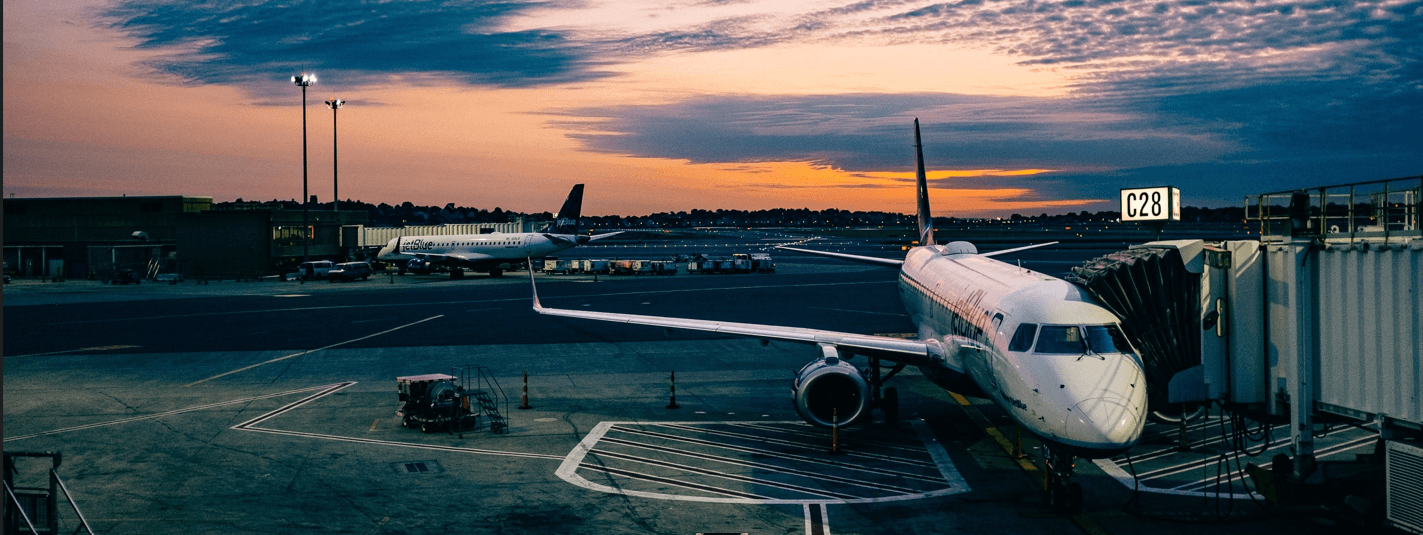
Credit - From the library of unsplash
The mileage landscape in 2026 rewards discipline more than it rewards enthusiasm. The travellers who redeem well are not the ones with the most miles. They are the ones who understand which programs deliver on which routes, who keep their points liquid until the moment of booking, and who treat the redemption as one option among several rather than as a game to win.
At Above9, premium travel is approached as a discipline rather than a transaction. The goal is not simply to book a business class seat, or to maximise a mileage balance, but to structure the journey so that the seat, the routing, the timing and the cost all serve the trip. Miles are one instrument in that toolkit. The experienced traveller uses them where they earn their place and pays cash where they do not.
For any traveller building a serious mileage strategy for the year ahead, the intelligent starting point is not "how do I earn more miles." It is "which redemptions will I actually make." Everything else follows from that answer.